
- A water bill that keeps climbing with no change in usage usually means water is leaving your system somewhere you can’t see.
- Running water sounds when everything is off means water is moving through a line it shouldn’t be. Check your meter to confirm.
- A warm spot on your floor that stays consistent and doesn’t move with the time of day points to a hot water line leak beneath the slab.
- Warped hardwood, loose tiles or damp carpet with no surface-level explanation means moisture is coming from underneath.
- Pressure dropping across multiple fixtures at once isn’t aging pipes. Your system is losing volume somewhere.
- A musty smell you can’t track down likely means moisture has collected beneath the slab and mold is setting in.
- New cracks in walls or your foundation that appear suddenly or keep growing suggest the leak has been active long enough to shift the supporting soil.
- If you’re noticing any of these, don’t try to access the leak yourself. Document what you’ve seen and get a professional assessment before the damage dictates the repair.
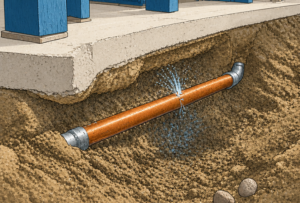
Carrollton homes are almost entirely built on slab foundations, which means your water lines run directly beneath the concrete. When a line develops a leak, the damage builds out of sight. By the time the evidence reaches the surface, it’s usually been going on for a while.
Here are seven warning signs worth paying attention to and why most homeowners don’t catch them early enough.
1. Your Water Bill Keeps Climbing
A small spike is easy to rationalize. Rates went up, or maybe the kids left the hose on. But if your usage habits haven’t changed and the number keeps creeping, water is leaving your system somewhere you can’t see. According to the EPA, the average household leak accounts for more than 9,300 gallons of water wasted every year. A slab leak can push that number significantly higher since it runs continuously until it’s found and repaired.
2. You Hear Water Running When Everything Is Off
This one usually shows up late at night when the house goes quiet, but a faint hiss or the sound of movement can be heard through the pipes. If every faucet, toilet and appliance is turned off, but the sound persists, water is moving through a line it shouldn’t be. This is often the first clue of a leak beneath the slab. If you want to confirm it, check your water meter with everything shut off.
3. A Section of Your Floor Feels Warm for No Reason
A localized warm spot on tile or flooring that wasn’t there before usually points to a hot water line leak running beneath the slab. It’s subtle enough to blame it on sunlight hitting the floor or heat from a nearby appliance. But if the spot is consistent and doesn’t move with the time of day, it’s not coming from above. This tends to show up most on ground-floor tile in kitchens and hallways where hot water lines run closest to the surface.
4. Your Flooring Is Damp, Warped or Buckling
Moisture from below doesn’t always show up as a puddle. It looks like warped hardwood, loose tiles, damp carpet in a room that has no reason to be wet, or soft spots underfoot. Most homeowners chalk it up to humidity or an old spill. But if the area stays damp with no surface-level explanation, the water is coming from underneath. Left alone, it only gets worse.
5. Water Pressure Drops Across Multiple Fixtures
One sluggish faucet is usually a clogged aerator. But when pressure drops across the kitchen, bathroom and outdoor spigots at the same time, your system is losing volume somewhere. This is one of the more common slab leak signs that gets written off as aging pipes or a municipal issue when the problem is much closer to home.
6. There’s a Musty Smell You Can’t Find the Source Of
Have you cleaned every corner of your house and there’s still that smell? When moisture collects beneath the slab and seeps into your flooring or walls, it creates the right conditions for mold and mildew to take hold. The odor has a source. It just isn’t somewhere you can reach without professional slab leak detection.
7. New Cracks Are Showing Up in Your Walls or Foundation
Every home settles over time, but new cracks along walls, baseboards or the foundation that appear suddenly or seem to be growing are a different story. Water escaping from a line beneath the slab can erode the supporting soil and shift the foundation. By the time visible cracking shows up, the leak has likely been active for a while, and slab leak repair becomes more involved than fixing the pipe alone.
What to Do If You Recognize These Signs
Don’t try to locate or access the leak yourself. The problem sits beneath your foundation, and digging or drilling without the right equipment can only make things worse. Instead, what you should do is document what you’ve noticed. That context helps a plumber narrow things down faster when they arrive.
From there, the smartest move is getting an assessment to confirm whether a leak is present and pinpoint its exact location. The sooner it’s identified, the more options you have before the damage dictates the repair.
If You See It, Don’t Wait on It
Slab leaks don’t fix themselves, and they don’t slow down. The longer a leak runs beneath your foundation, the more damage it does to your plumbing and potentially your home’s structure. If you’re noticing even one of these signs, it’s worth getting a professional opinion before a small problem turns into a big one.
Cole’s Plumbing provides leak detection in Carrollton and the surrounding communities, using non-invasive methods to locate the source without tearing up your property. If you suspect a slab leak in Carrollton, TX,, tell us what’s going on and we’ll help you figure out the right next step.